We develop applied R&D solutions that turn scientific and technological ideas into operational products and services. We work on prototypes, proofs of concept and industrial development programs with an engineering approach, experimental validation and technology transfer toward production or operational deployment.
Areas of expertise
- Embedded systems and avionics: firmware development, bus integration and HIL/SIL validation.
- Data processing and management: ingestion pipelines, normalization, time‑series storage and geospatial cataloging.
- Telemetry and ground segment: real‑time pipeline design, buffering, QoS and low‑latency distribution.
- Simulation and digital twin: physics‑based models, virtual testbeds and algorithm validation environments.
- Algorithms and artificial intelligence: anomaly detection, predictive maintenance and event classification on streaming data.
- Rapid prototyping and HW/SW integration: mechatronic development, sensor acquisition and integration testing.
- Cybersecurity for critical systems: hardening, PKI, end‑to‑end encryption and resilience planning.
R&D service offering
- Feasibility study: technical and scientific analysis, risk assessment and definition of experimental KPIs.
- Prototype and PoC: iterative development with technical milestones, HIL/SIL testing and functional demonstration.
- Software development and integration: modular architectures, CI/CD pipelines suitable for certification and configuration management via IaC.
- Experimental validation: test campaigns, telemetry collection, statistical analysis and technical reporting.
- Industrialization: technology transfer, production optimization and certification support.
- Scientific consulting: methodological support, experimental design and preparation of technical documentation.
Working methodology
- Define experimental objectives: functional and non‑functional requirements, success metrics and operational constraints.
- Modular design: architectural blueprints, interfaces and test specifications.
- Iterative development: technical sprints with continuous integration and automated testing.
- Validation and measurement: performance, resilience and compliance testing against requirements.
- Handover and scaling: documentation, training and an industrialization plan.
Benefits for the client
- Faster time to market through validated prototypes.
- Lower technical risk via repeatable tests and objective metrics.
- Effective technology transfer with documentation and training for operational autonomy.
- Scalable, maintainable architectures designed to evolve with the program.
Main Research & Development projects
WELLSPACE
The project “WELLSPACE: Assessing the impact of isolation on human Well-being, Spatial attention, and Neuro-physiological Correlates”, has been selected by the European Space Agency and it will take place in 2026 at the Envihab facility of the German Space Agency (Deutsches Zentrum für Luft- und Raumfahrt – DLR) in Cologne, Germany.
LiW@Space
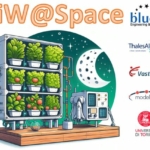
The Living Wall for a Space Application (LiW@Space) project lasted 18 months and ended on June 2025. The very tangible result is a working Space greenhouse installed onboard the SpaceHome 1:1 demonstrator inside Thales Alenia Space’s facilities in Turin, Italy.
After multiple tests and activities, the Space greenhouse systems work as planned.
If mankind will one day establish long term bases on other planets or on our Moon, many greenhouses will be needed to sustain the astronauts and to make their living outside Earth more bearable.
GRAVITO
The Spatial Attention and Motor Awareness in Altered Gravitational Environments (GRAVITO) project studies the microgravity effects on human subjects making use of custom designed scientific equipment. The neuroscience experiments were administered over 4 parabolic flights campaigns in the years 2019-2022.
The GRAVITO team and its equipment have flown onboard a modified Airbus A310 ‘Zero-G’ managed by Novespace company, part owned by CNES.

UIW
The Use-It-Wisely (UIW) project was financed under the FP7 framework. It started on September 2013 and ended on November 2016.
Use-It-Wisely comprised 20 partners from nine European countries across researchers, manufacturers and their customers. During the three year R&D project, the clusters worked on addressing specific challenges in six sectors: power plant turbines; mobile rock crushers; space products; trucks; shipping; and office furniture.
STEPS
The Systems and Technologies for Space Exploration (STEPS) project was financed by Piedmont Region in the framework of the Piedmontese Aerospace Platform using European Union funds and lasted 3 years (2010-2012).
Vastalla has contributed to the project in two Work Packages dealing with issues in Human Machine Interfaces and Engineering Multidisciplinary Support Tools.

SMILE-O
The Smart MeterIng for Local Energy Optimization (SMILE-O) project (2011-2013) focused on smart energy monitoring in a prosumer (producer-consumer) approach. On the final demonstrator there was a wind turbine connected over-the-air to an energy monitoring platform.